WHAT SHE LEARNED ABOUT ROUTINE IMMUNIZATION SCHEDULE

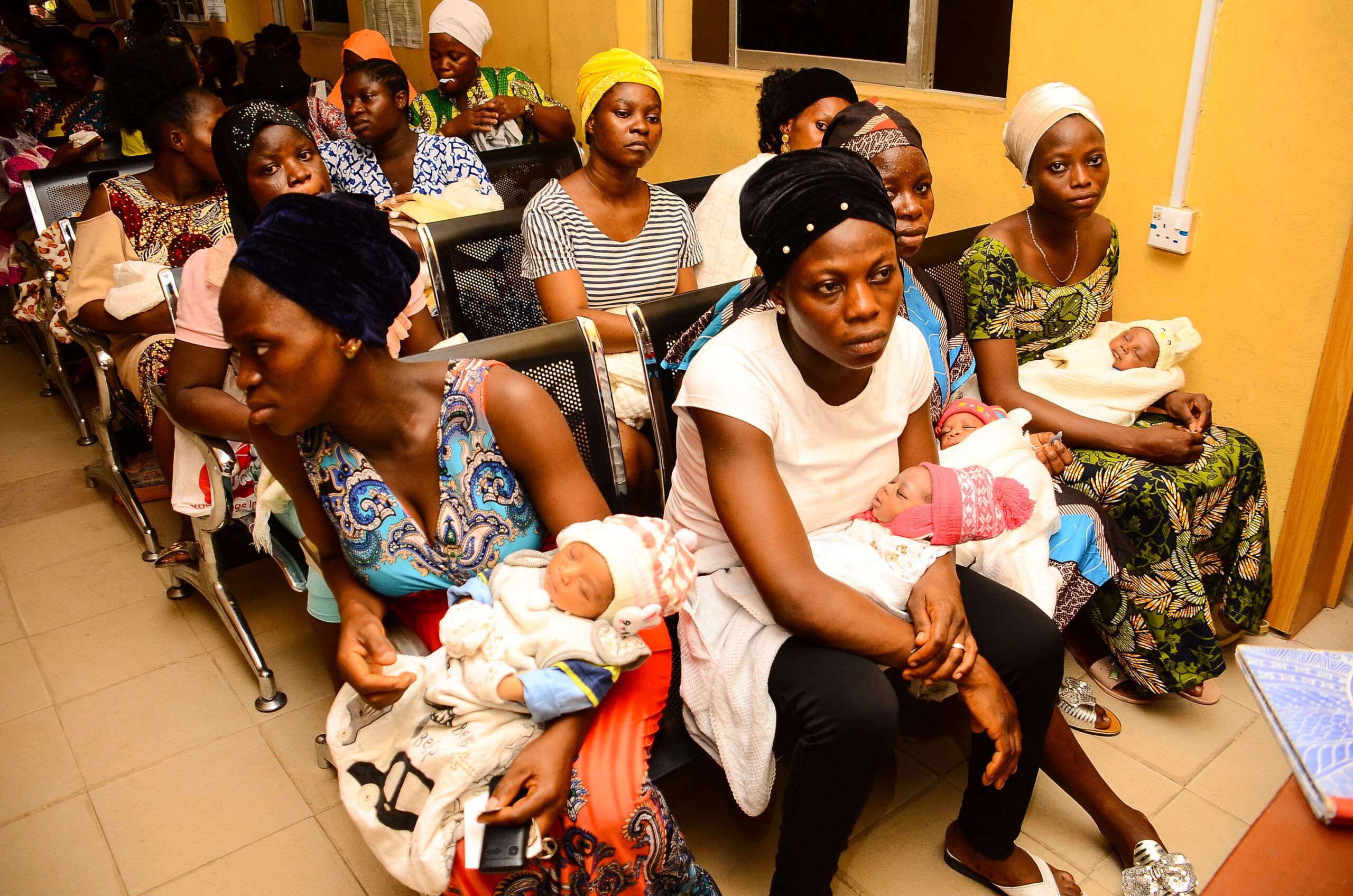
Six weeks after giving birth – Mama Kemi took her baby for her 6-week vaccination – visiting the primary healthcare in her neighborhood. She was welcomed with a smile by a dapper elderly Matron at the health facility.  Good morning mothers you all should have your sit – she went on to group the mothers based on the vaccination they came for; mothers for 6 weeks vaccination sat on her right-hand side, and mothers for 10 weeks and above vaccination sat on the other side.


First, I will be addressing mothers who came for 6 weeks vaccination; thanks for coming today, you’ve made a sacrifice to preserve the health of your baby, by ensuring they are protected from infectious diseases. If you were not consumed by the joy of your baby’s birth; you should recall within 12 hours after delivery, three vaccines were administered to your baby: Bacille Calmette-Guerin (BCG), Oral Polio Vaccine (OPV), and Hepatitis B vaccine.


The BCG vaccine helps your baby prevent tuberculosis a life-threatening disease – affects the lungs, and makes them cough non-stop: she demonstrated by coughing continuously into her pam – the atmosphere was filled with laughter like the health facility hall became a night of a thousand laugh comedy show.


The second vaccine baby receive na Oral polio vaccine, she switched to pidgin English: to accommodate mothers not highly educated – this one dey help pikin prevent polio infection wey they paralyze pikin: you go don see people wey polio affect their legs, he go prevent the leg from developing, so tay pikin no go ever fit waka. The mothers were all moved emotionally and suddenly the atmosphere became calm; they must have been able to recollect the picture of a person seated on a wheelchair seeking for alms someplace, sometime in their community.


The last vaccine baby received was hepatitis B vaccine, that vaccine one helps prevent hepatitis B infection – It affects the liver, and causes liver problems: liver injury (cirrhosis) and liver cancer.


Hope everyone has learned something? If you have questions ask or forever remain silent, she jokingly exclaimed! So back to today’s vaccination.

To learn more about other childhood vaccines contact Inocul8 on 08160962414.
rotavirus, rota, rotavaccine, vaccine, mother

Mama Kemi is visited by a longtime friend who recently moved to Lagos: Mary and Mama Kemi were University mates, best of friends before they got separated by marriage.


As they were talking, Mama Kemi asked a question ” What of Tobe, why did you not bring him along? ” this simple question changed what started as a happy reunion to a very sad but empathetic story.


Mary paused for few minutes, her mood changed as she frantically tried to search for answers to a simple question she was just asked – her faced was covered with sober reflection – the Mary Kay she wore could not hide it: it became a Jamb question.


She took courage, placed her pam across her mouth for few seconds, as tears gradually traced their path on her cheeks like tyre imprints on a newly tarred road, and started to narrate her story.


It’s a long story, Lady T – calling mama Kemi by the nickname she was known as in her University days. What started as a play went on to become a tragedy for me and my husband. When Tobe was around 6 months old – just when he started teething – he developed a mild fever – was acting restless – stooling, all at the same time, everything was happening just too fast for us.


We thought it was something not serious, so decided to get him medications from the pharmacy without even telling the doctor our complaints; while, requesting for them to give use Paracetamol and Flagyl syrup.


We administered these medications for two days, but his condition became severe; we decided to take him to the hospital. The Pediatrician we met requested some tests – his temperature was checked ­– his stool was taken to the lab.


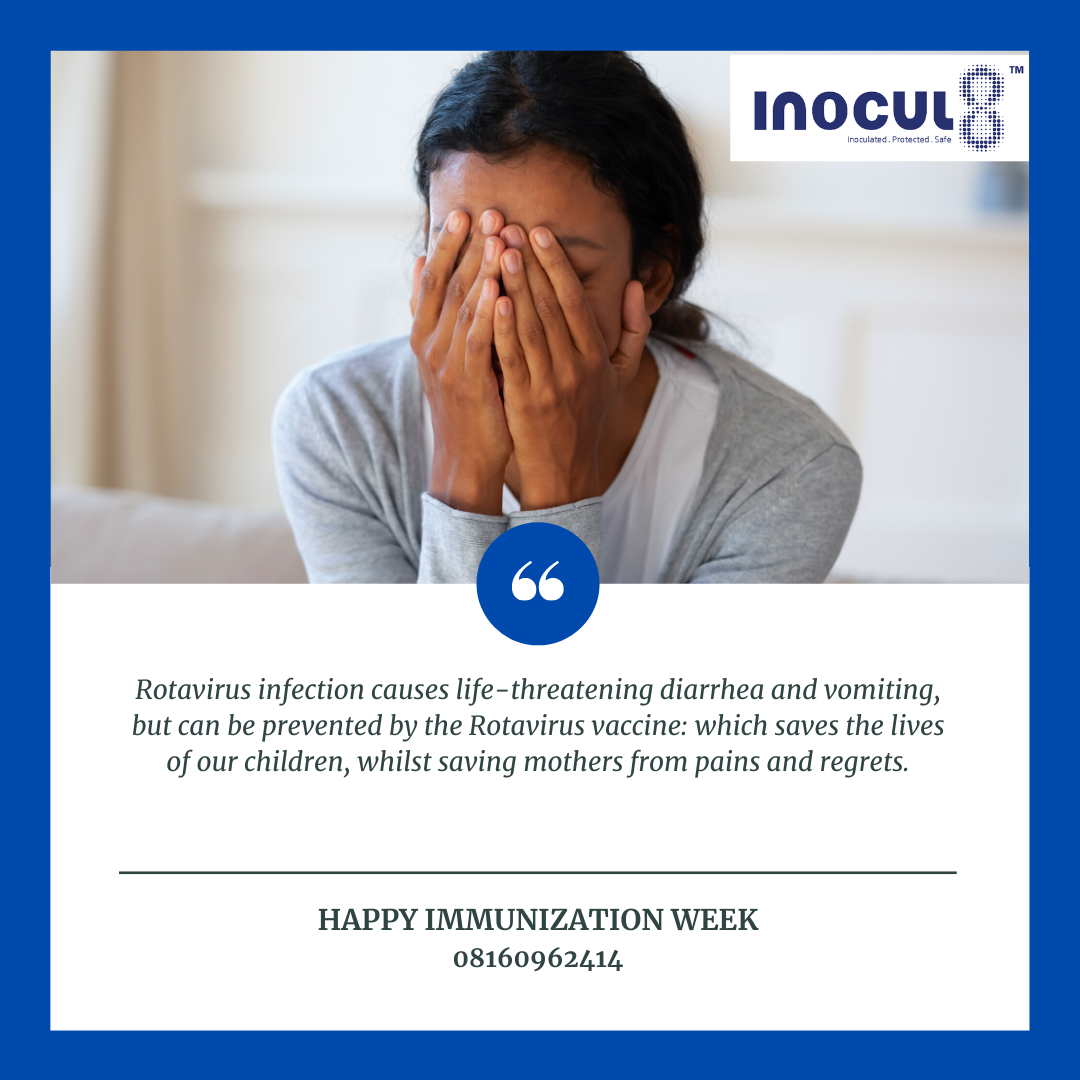
It was discovered he contracted Rotavirus infection: started mild but had progressed to a life and death situation. My son became so weak and was gradually losing consciousness. I clinched to my husband and held onto him like pegs to wet clothes on a line. I prayed to God that if I had offended him in any way he should please forgive me and save my son.


However, when the doctor said Rotavirus, it struck me, I saw that on his immunization card at weeks 6 and 10 respectively but ignored it as I was not told about it, I taught it wasn’t important. Lady T! She exclaimed – that is a mistake I will live the rest of my life to regret – I was too ignorant – I paid dearly for it, but not in cash, but with the life of my son.

Mama Kemi was befuddled by the story she just heard and drew closer to comfort her: petting her on the back.


For enquiry on how to get your child vaccinated against Rotavirus infection contact Inocul8 on 08160962414.

Mothers: 7 Hidden Secrets That Will Help Your Baby Prevent Life-threatening Diarrhea You Were Not Told (#7 A Must Read)

Despite diarrhea killing about 72,000 children under the age of 5 in Nigeria and 525,000 globally. Most mothers still don’t know there are easy ways to prevent diarrhea and that is what we intend to show you.


#1 Good handwashing practices are not negotiable. Caregivers and everyone in a household that lives with your little infant including the maid you hired should practice handwashing with soap regularly. Ensure you have a handwashing place in your house. Most diarrhea-causing microorganisms are transmitted from the hands and then to your baby’s mouth.


#2 Don’t let visitors carry your child without washing their hands or making use of a hand sanitizer (at least), refusing is not an act of embarrassment, it’s necessary for your baby’s health. For goodness’ sake you only know what you have done with your hands, you can’t speak for the other party. Imagine a visitor just shook hands with someone who just used the toilet and then meets you and out of excitement stretches the same hands to carry your little angel, better imagined than experienced.


#3 Ensure your floors are always clean and disinfected regularly. Most mothers think that teething causes diarrhea, but that’s not true! It is the micro-organisms such as (rotavirus, norovirus, small round structured virus, Giardia amongst others) that your baby picks from your floor and puts in his or her mouth during their teething phase as they try to relieve themselves of the discomfort caused by the growing tooth that causes diarrhea or loose stool.


#4 It is important to ask if it is part of a Creche requirement that children accepted are children that are being vaccinated, if not your baby stands the risk of contracting diseases in daycare centers where infection prevention and control measures aren’t prioritized.


#5 Practice exclusive breastfeeding this will help your baby, as it will reduce his or her exposure to contaminated food and water, and also strengthen his or her immune system.


#6 Dispose of human waste properly. Poorly disposed human wastes will one way or the other cause harm to us or others in our environment. This includes how you dispose of your baby’s used diapers.


#7 Vaccinate your baby against Rotavirus infection. Chances are high at 6 weeks and 10 weeks you did not vaccinate your baby against rotavirus, and you will justify that by saying ”I wasn’t told at the health facility,” clap for yourself! Most acute diarrhea cases in under 5 children are caused by rotavirus, and some can be so severe and life-threatening.


The first dose of the oral rotavirus vaccine should be given at 6 weeks or before your infant turns 14 weeks 6 days old. The second dose of the vaccine should be given at least 4 weeks after the first dose but before your baby clocks 8 months old. There are two brands of the vaccine in Nigeria; Rotarix (Your baby requires 2 doses) and Rotasil (Your baby requires 3 doses), always ask the type of rotavirus vaccine your child received as though rotavirus vaccine has been shown to protect against the most common strains of rotavirus (G1 and G3) the benefits of the vaccine are dependent on the type of vaccine used, with rhesus and human rotavirus the most efficacious.


For more information on how to access Rotavirus vaccine at a more affordable and faire price from CBPI Foundation feel free to reach us on 08160962414 (Call/WhatsApp).

5 Alarming Things About Cervical Cancer You Must Know As A Woman (#3 Will Blow Your Mind)

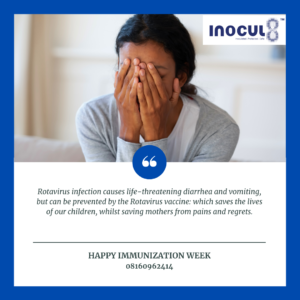
  • Alarmed African woman

You can save yourself the pain and cost associated with treating cervical cancer if you know these five things associated with the disease that affects over 570,000 women globally


#1 Cervical cancer is cancer that forms in tissues of the cervix (the organ connecting the uterus and vagina) of a woman. After infection by the Human Papillomavirus (HPV) 16 & 18, It can take up to 15 to 20 years for cervical cancer to develop in women with normal immune systems. Whereas in women with a weakened immune system, it can take about 5 to 10 years.


#2 Not every woman will experience symptoms once infected with HPV. As the virus causes changes to the body of a woman, you might experience any of the following symptoms; unexplained vaginal bleeding, abnormal vaginal discharge, pain during sexual intercourse, pain in the pelvis or lower back, trouble urinating or defecating.


#3 If your mother or sister had cervical cancer, your chances of developing the disease are higher than if no one in your family had it. Always know your family medical history as a woman.


#4 You can still come down with cervical cancer even after treatment of previous diseases. Recurrent cervical cancer usually occurs when the cancer is detected months after an initial cancer treatment regimen.


#5 Cervical cancer can spread from the original infection site which is the cervix to other organs such as the lung, liver, bladder, rectum, e.t.c This is called metastasis (forget the big grammar), it is simply the spreading of cancer cells to other locations in the body other than the original site it started from.


The good news is that you can prevent all the above from occurring by doing a Pap smear and getting vaccinated against HPV.


For information on where to get affordable cervical cancer screening services and HPV vaccination, kindly contact us via WhatsApp or mobile on +2348160962414 or follow us on Instagram @inocul8.

Rotavirus vaccine: How I almost missed vaccinating my baby

Funke just finished vaccinating her 10 weeks old baby and was about leaving the vaccination clinic, when a chubby looking woman with a baby on her back approached the Matron requesting for the Rotavirus vaccine.

”Good morning Matron I com ask if ona they give yotavayus vaccine,” the woman said in pidgin, yes we do the Matron replied with a very appealing voice, how old be your pikin? Matron then turns to attend to another mother.

The woman paused and started counting using her fingers, slowly mouthing some words eeh! eeh!! 5 weeks 6 weeks, she vacillated before responding my pikin na 6 weeks.

This instantly caught the attention of Funke, and she didn’t hesitate to indulge in the conversation, which one is Rotavirus vaccine again? My baby is 10 weeks old and she hasn’t received it, she said with a brooding expression.

The woman said to Funke ” na my neighbour tell me say he dey help pikin avoid water water shit (diarrhea) and vomiting.”

Thank you Funke said, and requested that her baby get vaccinated against Rotavirus.


Facts about Rotavirus vaccine:

  1. Rotavirus vaccine can prevent rotavirus disease.
  2. Rotavirus causes diarrhea, gastroenteritis, vomiting, and fever mostly in babies and young children. Diarrhea can be severe, and lead to life-threatening dehydration.
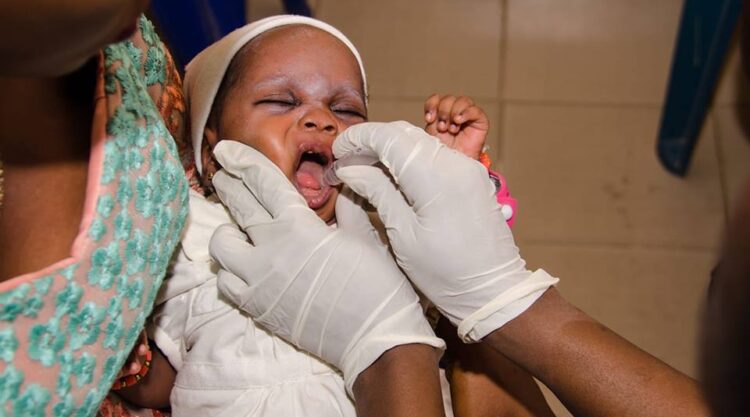
  3. Rotavirus vaccine is administered by putting drops in the child’s mouth. Babies should get 2 doses (Rotarix) or 3 doses (Rotasil) of rotavirus vaccine, depending on the brand of vaccine used.
  4. The first dose should be administered when the baby is 6 weeks of age.
  5. The last dose must be administered by 8 months of age.

For vaccination against Rotavirus:

Call or WhatsApp 08160962414.