Hepatitis B: Cost to treat in Nigeria?

hepatitis b: A male doctor and female nurse attend to a patient in a Nigerian hospital bed.

Regular specialist consultations and hospital visits are a critical, yet expensive, part of long-term Hepatitis B management in Nigeria.

Hepatitis B: How Much Does it Cost to Manage in Nigeria?

Imagine an enemy that you can live with in the same house for years without knowing. This is the situation of people living with hepatitis B infection. A liver disease caused by the hepatitis B virus (HBV). The illness can be prevented by taking three doses of the hepatitis vaccine, also known as hepb vaccine. Most patients ask, “hepatitis b is it curable?” Presently, there is no cure, so infected individuals will need to manage their health for an extended period. About 20 million Nigerians are living with the virus. Nine out of 10 don’t know they have it. These patients will need to manage their health through regular check-ups, a balanced diet, and the use of medications. This article presents the financial implications of hepatitis B treatment in Nigeria, drawing on research findings done in the country.

Cost of hepatitis B management in Nigeria

The National Financial Burden

According to Dr. Godwin Ntadom, Director of the Public Health Department at the Federal Ministry of Health (FMOH), the country’s collective expenses on hepatitis range between 13.3 and 17.9 trillion Naira. But the question the average Nigerian asks is: What does it cost me to manage a long-term HBV infection?

The Patient’s Burden of Hepatitis B

To understand the financial weight of this disease, we have categorised the costs into direct medical, direct non-medical, and indirect costs based on recent research estimates.

  1. Direct Medical Costs (#1, 413, 090 or $933/year)

These are the expenses strictly related to clinical care. For a person living with HBV, this includes:

  • Hospital registration and doctor consultation fees.
  • Antiviral and liver-protective medications.
  • Crucial laboratory tests such as Hepatitis B DNA viral load, serology, liver function tests, and abdominal ultrasound scans.
  1. Direct Non-Medical Costs (# 202, 215 or $133/year)

Treatment doesn’t happen in a vacuum. These are the “hidden” out-of-pocket expenses, including transportation to clinics, meals during hospital visits, and the costs incurred by caregivers or family members accompanying the patient.

  1. Indirect Healthcare Costs (#640,095 or $421/year)

This represents the “opportunity cost” of the disease. It quantifies the economic loss when a patient is unable to work or spend time productively due to illness or fatigue.

With an estimated total of $ 2,246,978 or $1,487 per year, managing Hepatitis B is a significant financial burden. For many Nigerian families, this amount is high enough to drive them into poverty as they battle to save the life of a loved one.

Conclusion 

Managing this liver condition in Nigeria is undeniably a costly endeavour. It requires a significant out-of-pocket expenditure that most individuals cannot sustain over the long term.

The most financially sound strategy is prevention using solutions like hepatitis b vaccination or hep b vaccination. It saves both money and lives. To understand how to protect yourself and your family from this financial and physical burden, you can consult with the doctors at Inocul8 today.


 

HPV Vaccine: Does It Cause Infertility?

HPV Vaccine: What Effect Does It have on fertility?

Picture of a man thinking if his daughters should receive the HPV Vaccine.James was worried about taking his daughters for the human papillomavirus (HPV) vaccination after hearing the vaccine caused infertility. 

The human papillomavirus (HPV) vaccine received authorisation for public use in 2006 to prevent diseases and cancers caused by the human papillomavirus. 

Parents are concerned that vaccinating their children against the human papillomavirus (HPV) might affect their ability to give birth later. Does the HPV vaccine cause infertility?

The HPV vaccine and its effect on fertility

Infertility is the inability of a couple to conceive after a year of regular and unprotected sexual intercourse.

According to the World Health Organisation (WHO), primary infertility is a situation where a woman has never gotten pregnant. Secondary infertility is when a woman has given birth earlier but now experiences difficulty in getting pregnant.

In the US, research conducted among women aged 18 to 33 found no link between the HPV vaccine and infertility. The scientists concluded that there was no evidence of a rise in infertility cases in women who received the HPV vaccine.

Similarly, a study was done to assess the effect of HPV immunisation on how easily women get pregnant. The experiment involved 3,483 women and 1,022 men participants. The researchers found that among women who had past sexually transmitted infections (STIs), the vaccine made it easy for them to become pregnant. 

A nationwide study was done in Denmark among 996,300 girls and women aged 11 to 34 years from 2007 to 2016. The researchers concluded that HPV vaccination is safe and doesn’t affect the ovaries of women nor their ability to conceive. 

In conclusion, if you’re a parent worried about the possible effect of the HPV vaccination on the fertility of your child. Don’t be troubled; scientific findings have shown that the vaccine has no negative effect on the fertility of those who received it. 

To learn more about the HPV vaccination, you can consult Inocul8 today and have our doctors provide you with detailed information.

Preventing HBV in Lagos: Inocul8’s 2019 World Hepatitis Day Outreach

Preventing HBV in Lagos: Inocul8’s 2019 World Hepatitis Day Outreach

Inocul8’s mission is to help people and families prevent infectious diseases, as we believe no one should suffer or die from illnesses that existing solutions can prevent.

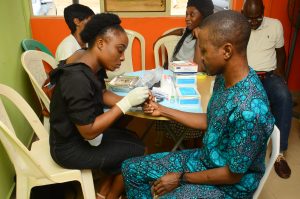
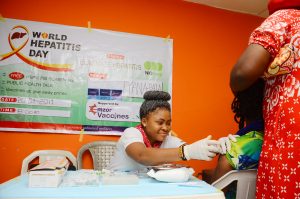
In 2019, to celebrate World Hepatitis Day (observed annually on July 28), we conducted a successful outreach program in Iyana Paja, Lagos State. The initiative focused on education, screening, and prevention.

Educating the Community

The outreach began with an educational session. Participants learned that hepatitis B is a liver disease caused by the Hepatitis B virus (HBV). They were strongly encouraged to participate in the screening exercise to determine their current status. We emphasised that individuals who tested negative should pursue vaccination.

Screening Participants for Hepatitis B

The Inocul8 team provided HBV screening to all participants, enabling them to know their infection status. The screening test works by detecting Hepatitis B surface proteins (HBsAg), which are present in anyone with the virus. The rapid test involves collecting a small blood sample and analysing it for these specific viral proteins.

Vaccination for Prevention

The final activity was offering vaccination to participants who tested negative for hepatitis B. The goal of the vaccination was to provide long-term protection against the infection in case of future exposure. Individuals require three doses of the vaccine to be fully immunised.

Meet the Founders

Meet the Founders

A long time ago, long before Inocul8 had a logo, a clinic, or even a name—a seed was planted.

Farmers say the best time to plant a tree was 20 years ago; the next best time is now. In many ways, that is how the Inocul8 story began: as a quiet seed of an idea that the future of health in Africa should be built on prevention, not on pain.

Inocul8 was officially founded in 2019 by Dr Osezua Momoh and Dr Emmanuel Egbroko, with a clear mission: to help families prevent communicable diseases. The spark for this mission, however, started years earlier. With a near-death experience Emmanuel had while serving as a Youth Corps member in Northern Nigeria.

Before Inocul8, they were just two young doctors in their twenties, full of questions and restless energy.

In 2016, Emmanuel and Momoh met at a Young African Leaders Initiative (YALI) Regional Leadership Center program at GIMPA in Accra, Ghana. Surrounded by other young leaders dreaming about the future of the continent, they began asking themselves a hard question:

“If we really want to change health in our country, where do we start?”

They both knew the truth: health insurance coverage was low, hospital wards were full, and people were still dying from diseases that had vaccines and simple preventive solutions. The more they spoke, the clearer it became—prevention wasn’t just important; it was the only logical starting point. Focusing on preventive healthcare, they decided, would be the best thing after sliced bread.

After YALI, life took them to different corners of Nigeria, but their shared mission followed them.

In December 2016, Momoh went to serve at Lagos State University Teaching Hospital (LASUTH), where he helped manage people living with HIV.

Emmanuel served at the General Hospital in Minna, Niger State, where he provided access to medications for patients living with HIV.

There, Emmanuel witnessed the reality of preventable disease up close:

  • He saw a high burden of hepatitis B among patients visiting the hospital.
  • He saw children on the streets who had lost their limbs to poliovirus infection.
  • He experienced communities struggling with poor access to clean water.

He carried these images with him and often called Momoh to share what he was seeing. Those conversations slowly turned into conviction: this was not how things had to be.

Then came the moment that changed everything.

In April 2017, Emmanuel fell critically ill and was hospitalised at the General Hospital in Minna with severe typhoid fever. Lying on the hospital bed, weak and unsure of what would happen next, he experienced firsthand what it meant to be on the other side of care—afraid, vulnerable, and dependent on a system already under pressure.

That hospital stay became his turning point.

It transformed their shared ideas from “someone should do something” into “we must build something.” That “something” eventually became Inocul8.

In Emmanuel’s words:

“We started Inocul8 to help people prevent infectious diseases because we didn’t want people to die from diseases that have affordable preventive solutions. I didn’t want people to experience what I went through in the hospital. I wanted access to prevention to be easy and convenient for everyone.”

From two young doctors with a shared conviction to a mission-driven brand, Inocul8 exists today because of one simple belief:

No one should suffer or die from a disease we already know how to prevent.

Purpose of the Inocul8 Brand

Purpose of the Inocul8 Brand

In Nigeria and across Africa, families like yours and mine often struggle to get simple preventive care. You may spend hours in a crowded clinic, only to see a health worker for a few minutes. Many people give up, delay vaccination, or fail to receive the protection they need.

Because prevention is hard to access, diseases like hepatitis B, the human papillomavirus (HPV), and other childhood diseases still quietly harm millions of people. Busy schedules, long distances to clinics, and confusing health information contribute to the burden. The system is not built around the real lives of families.

That’s why, since 2019, Inocul8 has been on a mission to make disease prevention easy, convenient, and timely for millions of Nigerians and Africans.

As a preventive healthcare brand, we bring you:
• Clear, simple information on how to protect yourself and your family
• Convenient access to disease prevention interventions such as vaccines and other preventive services, without the usual stress

Our purpose is simple:
To help families stay free from preventable diseases by making protection easy to understand and easy to get.

Stay in touch with us:

Instagram/Facebook: https://instagram.com/inocul8

TikTok: https://www.tiktok.com/@inocul8_global

Website: https://inocul8.com.ng/

WhatsApp: +2347063736485, +2349136095157 (bot)

HPV Vaccine After 25: What Every Adult Should Know Part 1

Smiling young woman with curly hair standing confidently, symbolizing empowerment through HPV vaccination awareness.

A confident woman stands as a reminder that HPV vaccination empowers adults to protect their health at any age.

Funke was scrolling through posts on Facebook when she encountered content from a popular healthcare influencer on the human papillomavirus (HPV) vaccine and how it helps girls aged 9 to 14 prevent genital warts and cervical cancer.
“What about me?” she wondered. “I’m over 25 — can’t it help me avoid the pain and suffering from HPV-related diseases?”

Like Funke, you might be asking a similar question: Can adults over 25 get the HPV vaccine? This piece provides the burning answers you’ve been looking for.

What Are the Chances of Getting HPV After 25?

The risk of getting HPV after age 25 remains significant. The infection is most common during youth, especially because of social behaviours and risky lifestyles. In fact, within four years of becoming sexually active, about 63% of women become infected.

But the risk doesn’t end there — people over 25 can still catch HPV and remain at risk for the rest of their lives. Once infected, the virus might disappear or stay hidden in the body, only to come back later.

Unlike viruses such as chickenpox, getting HPV once doesn’t protect you from future infections. You can get infected again with the same or different HPV types, even if your body cleared the first infection.

Your chance of HPV infection after 25 increases with new sexual partners. This shows that natural protection doesn’t do much to defend against the virus throughout a woman’s life. In fact, many studies have shown a second rise in HPV cases after age 45 or 50, often around the time of menopause.

Why HPV Vaccination Matters for Adults

Over the past 30 years, people have been getting married later and more have experienced divorce. Because of this, it has become more common for people to have new romantic or sexual partners both before marriage and again in middle age, which adds to the ongoing risk of HPV.

If both young adults and older women still face this risk, why aren’t more adults being vaccinated? Some healthcare providers believe that older women must have already been infected, so the HPV vaccine for adults wouldn’t be useful. But is there a way to check if someone had HPV before getting vaccinated?

Currently, no commercial tests are available to confirm past HPV infections before vaccination. The tests that would be needed aren’t widely accessible, and even if they were, they would likely be expensive and difficult to use in many parts of the world — especially in regions like Nigeria and other low- and middle-income countries.

That’s why HPV vaccination for women over 25 remains one of the most practical and powerful ways to protect against cervical cancer, genital warts, and other HPV-related diseases.

In part two, we discussed what happened when the vaccine was administered to people over 25 years, and the result will amaze you. To learn more about HPV and how it can be prevented, you can follow us on Instagram or sign up for our newsletter.

Get Your Yellow Fever Vaccination in Nigeria Early

Get Your Yellow Fever Vaccination in Nigeria Early

Yellow fever vaccination Nigeria

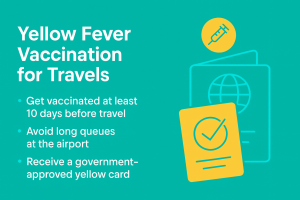
A turquoise-green Inocul8 infographic showing a yellow card and passport.

Tunde was thrilled to attend a conference in Ethiopia. At the airport, he learned that he needed a yellow fever certificate and that he must receive the yellow fever vaccine at least 10 days before travel. That simple rule changed everything.

The Risk of a Last‑Minute Rush

Tunde left Ajah at 4:30 a.m. for the Murtala Muhammed International Airport. It was a risky, costly, and stressful endeavour. Only 150 people were accepted that day, so he had to return.

Act early. Book your yellow fever vaccination in Nigeria well in advance to avoid delays and long queues.

Short on time? Inocul8’s yellow fever vaccination service in Lagos helps you get vaccinated and receive your government‑approved yellow card quickly.

Long Queues and Delays

  • Online payments and passport biodata copies
  • Moving between buildings
  • Hours of waiting—sometimes over five hours

Inocul8 Yellow Fever Vaccination Service offers a fast, hassle‑free process for busy travellers. No endless lines. No wasted hours.

Why the 10‑Day Rule Matters

You must take the yellow fever vaccine at least 10 days before you fly. Your body needs time to build protective antibodies. Many people gain protection by day 10; some take up to 30 days. Get vaccinated early and travel with confidence.

Scarcity and Fake Yellow Cards

Sometimes, yellow card certificates run out at government centres. Some travellers are tempted by fake cards. This can cause denial of entry abroad.

Use only government-approved vaccination clinics in Nigeria, such as Inocul8, to obtain an authentic, yellow fever vaccination record that meets travel health requirements in Nigeria.

Why Choose Inocul8?

  • Authentic yellow card certificate in Nigeria
  • Quick yellow fever vaccine appointments with minimal waiting
  • Safe, clean, and professional service

Save time, stress, and energy. Focus on your trip, not the queue.

Key Takeaways

  • Book your yellow fever vaccination in Nigeria at least 10 days before travel.
  • Avoid long queues with Inocul8’s travel vaccination service in Lagos.
  • Protect yourself from fake yellow card certificates.
  • Use approved yellow fever vaccination centres in Nigeria for a valid card.

Ready to Travel?

Skip the stress. Get your yellow fever vaccine in Nigeria and a yellow card certificate through Inocul8.

Book Your Appointment. You can read our last post on why yellow fever vaccination is a mandatory travel requirement for Nigerians.

Why Yellow Fever Vaccination is a Mandatory Travel Requirement for Nigerians

✈️ A Story Many Travellers Can Relate To

Dayo, a 34-year-old Nigerian, was preparing for his long-awaited trip to Brazil when his travel agent called with bad news: his documents were incomplete because his yellow card certificate was missing.

He was shocked and frustrated. “I’ve submitted every document! Why is this yellow card such a big deal?” he asked.

That simple question opens up an important conversation: Why is yellow fever vaccination mandatory for Nigerians travelling to certain countries?

What is Yellow Fever?

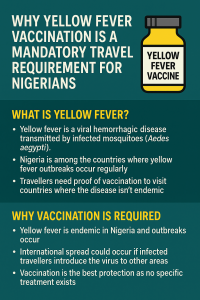
Yellow fever is a viral hemorrhagic disease (similar to Ebola) transmitted by infected Aedes aegypti mosquitoes.
Nigeria is one of several countries where yellow fever outbreaks occur regularly, and the disease remains a major public health concern.

Travellers from Nigeria who plan to visit countries where yellow fever is not endemic must show proof of vaccination through a yellow card certificate.

Yet, many Nigerians still don’t realise that this small yellow booklet is a crucial travel document, as essential as a passport or visa.

Why Yellow Fever Vaccination is Required for Nigerians

Yellow fever is endemic in Nigeria, meaning the virus circulates continuously in the environment. Occasional outbreaks lead to nationwide vaccination campaigns to control transmission.

When an unvaccinated traveller from Nigeria visits a country where yellow fever isn’t common, there’s a risk of importing the virus into that country.
This could expose people who have no immunity and cause new outbreaks in previously unaffected areas.

There’s also no specific treatment for yellow fever, only supportive care.
This makes prevention through vaccination the best and only effective protection.

The Legal Side: International Health Regulations (IHR 2005)

Some travellers joke, “I don’t need the shot, just give me the certificate.”
But here’s the truth: this isn’t optional, it’s international law.

Under the World Health Organisation’s International Health Regulations (IHR 2005), yellow fever is the only disease that legally requires proof of vaccination for international travel.

Countries have the authority to:

  • Deny entry to unvaccinated travellers from risk zones (like Nigeria).

  • Request valid yellow cards at airports and border posts.

  • Quarantine travellers who fail to comply.

Your yellow card certificate is officially known as the International Certificate of Vaccination or Prophylaxis (ICVP). Immigration officers will check it upon arrival and verify its authenticity.
Trying to bypass the system with fake documents isn’t just risky — it’s a violation of international law.

Why It’s Especially Important for Nigerians

Nigeria has recorded recurrent yellow fever outbreaks in states such as Bauchi, Delta, Benue, and Edo. Because of this, the country is classified by the WHO as high-risk for yellow fever transmission.

As a result, many countries, especially in South America, Asia, and the Middle East, require Nigerian travellers to show proof of vaccination before entry or even during layovers.

This isn’t just about bureaucracy; it’s a global safety measure designed to protect other populations from imported infections.

⚠️ What Happens If You’re Not Vaccinated

Skipping your yellow fever vaccination can lead to serious consequences:

  • ❌ You may be denied boarding at the airport.

  • Immigration may refuse your entry upon arrival.

  • You could be quarantined at your own expense.

  • You might miss business meetings or conferences after paying for tickets and hotels.

  • And if you fall ill abroad, medical treatment can be costly — especially without travel insurance.

How Long Does the Vaccine Last?

Good news! The yellow fever vaccine is highly effective and provides lifelong immunity after a single dose.
It becomes valid 10 days after vaccination, and the certificate remains valid for life under the WHO regulations.

Ensure you receive the vaccination at an accredited facility in Nigeria to obtain a legitimate yellow card. To learn more, please contact Inocul8 on +2347063736482 or visit our website and Google page.


Why do Hospitals make it mandatory for Pregnant women to screen for HIV and Hepatitis?

Protect your little one with Hepatitis Screening During Pregnancy

Pregnancy is a beautiful journey filled with anticipation, dreams, and heavy responsibility. While many women focus on eating right, taking vitamins, and attending routine checkups, one important health check often goes unnoticed—hepatitis screening.

My Story

In 2021, I was posted to a general hospital in a South-South state of Nigeria for my National Youth Service Corps (NYSC). Honestly, I wasn’t thrilled. I had hoped for a big city experience—Abuja, Lagos, or even Port Harcourt. I tried every connection I had, but nothing worked. Eventually, I packed my bags and made the long, bumpy journey to my new station. As I watched the endless stretch of bushes pass by, I cried. This wasn’t the NYSC I imagined, but everything changed when I arrived at the hospital. 

Next to the main hospital stood a beautifully structured building with the sign: “Maternity Referral Centre.” That building gave me hope—it stood as a testament to something good happening in that community. I soon learned from one of the nurses that the state government had built the Centre to reduce the high maternal death rate in the area. Most women in the community gave birth at home or with traditional birth attendants, without proper medical supervision. Sadly, complications were common. Many of these complications led to death.

Over time, some of these mothers and their babies would come to the hospital with unusual symptoms such as yellowing of the skin and eyes (jaundice). Most tests revealed that both mother and child were hepatitis positive. Shocked, many mothers would ask, “How could my baby have hepatitis?”

That question sparked a wave of awareness in the community about the importance of antenatal care, including hepatitis screening. Gradually, more women started showing up for proper checkups, and the maternity Centre became a beacon of hope and life. That experience solidified my passion for maternal health. Finally, I was starting to find purpose in this place.

Here is what every woman should know about hepatitis during pregnancy

Hepatitis

A viral infection that affects the liver and results in inflammation. 

There are 5 types of hepatitis: A, B, C, D and E.  Hepatitis B and C are the deadliest forms of Hepatitis, leading to chronic diseases which, if not properly managed, can lead to liver failure or liver cancers. 

How is Hepatitis B transmitted?

Hepatitis can be transmitted from person to person by direct blood contact, unprotected sex, sharing hygienic equipment like a razor, toothbrush or earrings, sharing needles, tattoos, piercings, barbers or during circumcisions and from a mother to her child during birth.

Hepatitis in pregnancy

Viral hepatitis in pregnancy increases the risk for pregnancy‐related complications, as well as the risks associated with acute and chronic liver disease for both the mother and the infant as a result of mother‐to‐child transmission (MTCT). When a woman is pregnant, undetected hepatitis increases the risk of transmitting the virus to her baby, either during pregnancy, childbirth, or breastfeeding (in the case of Hepatitis B). Hepatitis in pregnancy can result in preterm birth (premature baby), abruption of the placenta, low birth weight, fetal distress, still birth, acute liver failure, and in the mother, hypertension in pregnancy can be observed as reported also in the community where I served. 

Signs and symptoms to look out for

At the early stage of hepatitis infection, there are usually no signs. Absolutely nothing tells you something is wrong there, but as the virus continues to infiltrate the liver, you begin to notice jaundice (yellowing of the skin and eyes), dark urine, nausea, vomiting, abdominal pain and extreme fatigue. While these symptoms can also indicate other disease states, screening for hepatitis is the most effective way for you to know you have hepatitis.

Preventing Hepatitis

  • Get screened to know your status as early detection saves.
  • Vaccination provides over 95% protection against Hepatitis A and B.
  • Proper hygiene like, washing hands after using the toilet and eating properly washed and cooked food can help prevent infection with Hepatitis A and E.
  • Practice safe sex; using a condom.
  • Avoid sharing personal items and sharp objects.

Stay tuned for part 2. There you will see practical steps to keeping your baby safe.


The Liver Works Hard for You: How to Protect The Liver

How to care for your liver and protect yourself from Hepatitis.

What is Hepatitis?

Hepatitis is a disease characterised by inflammation of the liver.

Hepatitis can be a viral or non-viral infection. Depending on the type, it is transmitted through contact with infected blood, bodily fluid or contaminated food.

There are five types of viral hepatitis named according to the alphabet – A, B, C, D and E

Non-viral Hepatitis can be gotten from excessive alcohol intake, and abuse or misuse of drugs like paracetamol.

Hepatitis B and C are the major causes of life-long (chronic) liver disease which can significantly damage the liver and lead to cirrhosis or liver cancer.

How can you tell that it is Hepatitis?

Symptoms of hepatitis can include jaundice (yellowing of the skin and eyes), fatigue, abdominal pain, loss of appetite, nausea, vomiting, and fever.

Here are four things you can do to care for your liver and protect yourself from Hepatitis.

1. Maintain a Healthy Lifestyle
  1. Eat a balanced diet of fruits and vegetables, whole grains like oats, lean proteins like chicken, fish, beans, and legumes and healthy fats like avocados, nuts, seeds, and olive oil.
  2. Avoid toxins and don’t overuse drugs like paracetamol.
  3. Exercise regularly and engage in only safe sex practices.
  4. Drink plenty of water throughout the day to help the liver function optimally and flush out toxins from your body.
2. Limit Alcohol Intake

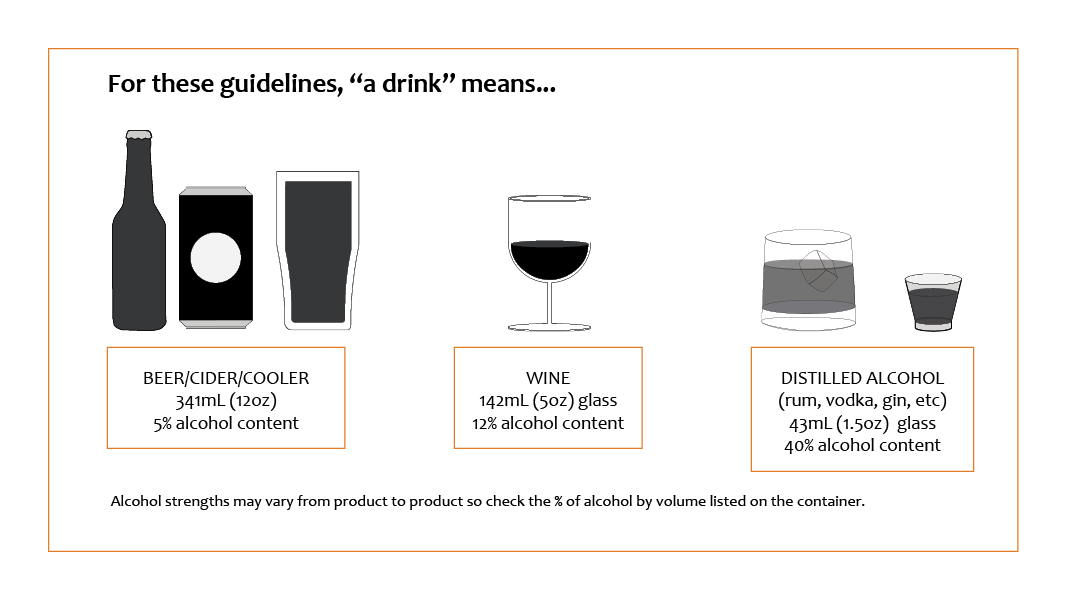
If you drink alcohol, do so in moderation. For women, this means up to one drink per day, and for men, up to two drinks per day. Excessive alcohol consumption can lead to liver damage, including fatty liver, hepatitis, and cirrhosis.

Use this guide to quantify your drinks.

Guidance to determining what makes up one drink.341mL of 5% alcohol like beer, 142mL of 12% alcohol like wine, 43mL of 40% alcohol like rum, gin, vodka etc.

Based on the Canadian Guidance on Alcohol and Health.

3. Get Vaccinated

Protect yourself from Hepatitis A and B by getting vaccinated. These infections can cause serious liver damage- cirrhosis and liver cancer.

4. Carry Out Regular Health Checks

Schedule regular check-ups with your healthcare provider to monitor the liver’s health and catch any potential issues early. If you have risk factors for liver disease, such as a family history or chronic conditions, discuss appropriate screenings with your doctor.


Your liver is vital to your health. By making these small, manageable changes, you can protect yourself from hepatitis and support your liver’s health.

Share this information with family and friends to spread awareness about the importance of liver health.

Get tested, get vaccinated, and if you already live with hepatitis, explore our comprehensive myHealth plan to support and manage your life with hepatitis.

Click here to get started.