
Preventing HBV in Lagos: Inocul8’s 2019 World Hepatitis Day Outreach

Preventing HBV in Lagos: Inocul8’s 2019 World Hepatitis Day Outreach

Inocul8’s mission is to help people and families prevent infectious diseases, as we believe no one should suffer or die from illnesses that existing solutions can prevent.

In 2019, to celebrate World Hepatitis Day (observed annually on July 28), we conducted a successful outreach program in Iyana Paja, Lagos State. The initiative focused on education, screening, and prevention.

Educating the Community

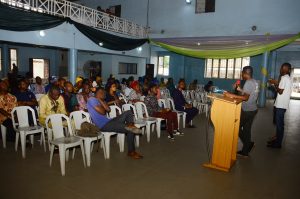
The outreach began with an educational session. Participants learned that hepatitis B is a liver disease caused by the Hepatitis B virus (HBV). They were strongly encouraged to participate in the screening exercise to determine their current status. We emphasised that individuals who tested negative should pursue vaccination.
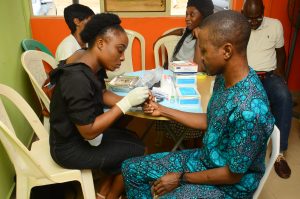
Screening Participants for Hepatitis B

The Inocul8 team provided HBV screening to all participants, enabling them to know their infection status. The screening test works by detecting Hepatitis B surface proteins (HBsAg), which are present in anyone with the virus. The rapid test involves collecting a small blood sample and analysing it for these specific viral proteins.
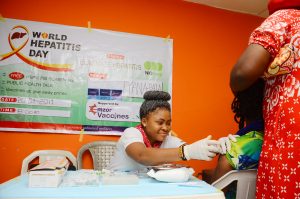
Vaccination for Prevention

The final activity was offering vaccination to participants who tested negative for hepatitis B. The goal of the vaccination was to provide long-term protection against the infection in case of future exposure. Individuals require three doses of the vaccine to be fully immunised.
Meet the Founders

Meet the Founders

A long time ago, long before Inocul8 had a logo, a clinic, or even a name—a seed was planted.

Farmers say the best time to plant a tree was 20 years ago; the next best time is now. In many ways, that is how the Inocul8 story began: as a quiet seed of an idea that the future of health in Africa should be built on prevention, not on pain.

Inocul8 was officially founded in 2019 by Dr Osezua Momoh and Dr Emmanuel Egbroko, with a clear mission: to help families prevent communicable diseases. The spark for this mission, however, started years earlier. With a near-death experience Emmanuel had while serving as a Youth Corps member in Northern Nigeria.

Before Inocul8, they were just two young doctors in their twenties, full of questions and restless energy.

In 2016, Emmanuel and Momoh met at a Young African Leaders Initiative (YALI) Regional Leadership Center program at GIMPA in Accra, Ghana. Surrounded by other young leaders dreaming about the future of the continent, they began asking themselves a hard question:

“If we really want to change health in our country, where do we start?”

They both knew the truth: health insurance coverage was low, hospital wards were full, and people were still dying from diseases that had vaccines and simple preventive solutions. The more they spoke, the clearer it became—prevention wasn’t just important; it was the only logical starting point. Focusing on preventive healthcare, they decided, would be the best thing after sliced bread.

After YALI, life took them to different corners of Nigeria, but their shared mission followed them.

In December 2016, Momoh went to serve at Lagos State University Teaching Hospital (LASUTH), where he helped manage people living with HIV.

Emmanuel served at the General Hospital in Minna, Niger State, where he provided access to medications for patients living with HIV.

There, Emmanuel witnessed the reality of preventable disease up close:

  • He saw a high burden of hepatitis B among patients visiting the hospital.
  • He saw children on the streets who had lost their limbs to poliovirus infection.
  • He experienced communities struggling with poor access to clean water.

He carried these images with him and often called Momoh to share what he was seeing. Those conversations slowly turned into conviction: this was not how things had to be.

Then came the moment that changed everything.

In April 2017, Emmanuel fell critically ill and was hospitalised at the General Hospital in Minna with severe typhoid fever. Lying on the hospital bed, weak and unsure of what would happen next, he experienced firsthand what it meant to be on the other side of care—afraid, vulnerable, and dependent on a system already under pressure.

That hospital stay became his turning point.

It transformed their shared ideas from “someone should do something” into “we must build something.” That “something” eventually became Inocul8.

In Emmanuel’s words:

“We started Inocul8 to help people prevent infectious diseases because we didn’t want people to die from diseases that have affordable preventive solutions. I didn’t want people to experience what I went through in the hospital. I wanted access to prevention to be easy and convenient for everyone.”

From two young doctors with a shared conviction to a mission-driven brand, Inocul8 exists today because of one simple belief:

No one should suffer or die from a disease we already know how to prevent.

Purpose of the Inocul8 Brand

Purpose of the Inocul8 Brand

In Nigeria and across Africa, families like yours and mine often struggle to get simple preventive care. You may spend hours in a crowded clinic, only to see a health worker for a few minutes. Many people give up, delay vaccination, or fail to receive the protection they need.

Because prevention is hard to access, diseases like hepatitis B, the human papillomavirus (HPV), and other childhood diseases still quietly harm millions of people. Busy schedules, long distances to clinics, and confusing health information contribute to the burden. The system is not built around the real lives of families.

That’s why, since 2019, Inocul8 has been on a mission to make disease prevention easy, convenient, and timely for millions of Nigerians and Africans.

As a preventive healthcare brand, we bring you:
• Clear, simple information on how to protect yourself and your family
• Convenient access to disease prevention interventions such as vaccines and other preventive services, without the usual stress

Our purpose is simple:
To help families stay free from preventable diseases by making protection easy to understand and easy to get.

Stay in touch with us:

Instagram/Facebook: https://instagram.com/inocul8

TikTok: https://www.tiktok.com/@inocul8_global

Website: https://inocul8.com.ng/

WhatsApp: +2347063736485, +2349136095157 (bot)

Why do Hospitals make it mandatory for Pregnant women to screen for HIV and Hepatitis?

Protect your little one with Hepatitis Screening During Pregnancy

Pregnancy is a beautiful journey filled with anticipation, dreams, and heavy responsibility. While many women focus on eating right, taking vitamins, and attending routine checkups, one important health check often goes unnoticed—hepatitis screening.

My Story

In 2021, I was posted to a general hospital in a South-South state of Nigeria for my National Youth Service Corps (NYSC). Honestly, I wasn’t thrilled. I had hoped for a big city experience—Abuja, Lagos, or even Port Harcourt. I tried every connection I had, but nothing worked. Eventually, I packed my bags and made the long, bumpy journey to my new station. As I watched the endless stretch of bushes pass by, I cried. This wasn’t the NYSC I imagined, but everything changed when I arrived at the hospital. 

Next to the main hospital stood a beautifully structured building with the sign: “Maternity Referral Centre.” That building gave me hope—it stood as a testament to something good happening in that community. I soon learned from one of the nurses that the state government had built the Centre to reduce the high maternal death rate in the area. Most women in the community gave birth at home or with traditional birth attendants, without proper medical supervision. Sadly, complications were common. Many of these complications led to death.

Over time, some of these mothers and their babies would come to the hospital with unusual symptoms such as yellowing of the skin and eyes (jaundice). Most tests revealed that both mother and child were hepatitis positive. Shocked, many mothers would ask, “How could my baby have hepatitis?”

That question sparked a wave of awareness in the community about the importance of antenatal care, including hepatitis screening. Gradually, more women started showing up for proper checkups, and the maternity Centre became a beacon of hope and life. That experience solidified my passion for maternal health. Finally, I was starting to find purpose in this place.

Here is what every woman should know about hepatitis during pregnancy

Hepatitis

A viral infection that affects the liver and results in inflammation. 

There are 5 types of hepatitis: A, B, C, D and E.  Hepatitis B and C are the deadliest forms of Hepatitis, leading to chronic diseases which, if not properly managed, can lead to liver failure or liver cancers. 

How is Hepatitis B transmitted?

Hepatitis can be transmitted from person to person by direct blood contact, unprotected sex, sharing hygienic equipment like a razor, toothbrush or earrings, sharing needles, tattoos, piercings, barbers or during circumcisions and from a mother to her child during birth.

Hepatitis in pregnancy

Viral hepatitis in pregnancy increases the risk for pregnancy‐related complications, as well as the risks associated with acute and chronic liver disease for both the mother and the infant as a result of mother‐to‐child transmission (MTCT). When a woman is pregnant, undetected hepatitis increases the risk of transmitting the virus to her baby, either during pregnancy, childbirth, or breastfeeding (in the case of Hepatitis B). Hepatitis in pregnancy can result in preterm birth (premature baby), abruption of the placenta, low birth weight, fetal distress, still birth, acute liver failure, and in the mother, hypertension in pregnancy can be observed as reported also in the community where I served. 

Signs and symptoms to look out for

At the early stage of hepatitis infection, there are usually no signs. Absolutely nothing tells you something is wrong there, but as the virus continues to infiltrate the liver, you begin to notice jaundice (yellowing of the skin and eyes), dark urine, nausea, vomiting, abdominal pain and extreme fatigue. While these symptoms can also indicate other disease states, screening for hepatitis is the most effective way for you to know you have hepatitis.

Preventing Hepatitis

  • Get screened to know your status as early detection saves.
  • Vaccination provides over 95% protection against Hepatitis A and B.
  • Proper hygiene like, washing hands after using the toilet and eating properly washed and cooked food can help prevent infection with Hepatitis A and E.
  • Practice safe sex; using a condom.
  • Avoid sharing personal items and sharp objects.

Stay tuned for part 2. There you will see practical steps to keeping your baby safe.


Is the Flu The Current Pandemic? Here is everything you need to know about it.

young person sneezing into a tissue. everything you need to know about the flu
What is the Flu?

Influenza, commonly known as the flu, is a contagious respiratory illness caused by influenza viruses.

What are some of the common symptoms?

Symptoms range from mild to severe: fever, cough, body aches, and fatigue.

How Does it Spread?

The flu primarily spreads person-to-person, with transmission possible before symptoms surface. Crowded places, close contact with infected individuals, and touching surfaces contaminated with the virus contribute to its rapid transmission. So, you can see that we’re all at risk of spreading and contracting it from each other.

We’re currently in a season where this infection thrives, and many people spread it by just coughing or sneezing.

How can we tackle this?

Annual vaccination with the flu vaccine (for the year) is a cornerstone, providing immunity against prevalent strains. Some medicines for allergies help reduce the duration and intensity of the infection.

How do you Protect yourself?

Adopting simple yet effective measures like good personal hygiene and regular handwashing can go a long way in protecting yourself and others. You should also avoid close contact with sick people and practice respiratory etiquette by covering your mouth and nose when sneezing or coughing.

Maintaining a strong immune system through a balanced diet, regular exercise, and adequate sleep enhances your body’s ability to ward off infections.


Here are answers to Some of Your Frequently Asked Questions

DOES THE VACCINE HAVE ANY SIDE EFFECTS

Common side effects are soreness, redness or swelling of the injection area. You may also experience mild effects of the ilness like minor hedache, fever or pain which will go away in a day or two.

WHO CAN TAKE THE FLU VACCINE?

Everyone from 6 months of age is eligible to get the flu vaccine

WHEN IS THE BEST TIME TO GET MY VACCINE?

It is best to vaccinate before the flu starts spreading in your area.

WHY IS THE FLU VACCINE TAKEN YEARLY

The flu viruses constantly change so an updated vaccine is produced annually to tackle the possible strains for the year.

WHERE CAN I GET THE FLU VACCINE?

You can get the influenza vaccine anywhere you choose -at home, your office or any of our vaccination access points in Lagos, Port Harcourt, and other select states nationwide.

DO I NEED TO MAKE A BOOKING?

Yes. Please book your appointment at cowva.com/booking or reach us via call/WhatsApp at +2347063736485 if you need further guidance.

Cervical Cancer Screening and Prevention: What Everyone Should Know


Embarking on a journey to safeguard your well-being starts with knowledge and proactive choices. In recognition of Cervical Health Awareness Month, we delve into some cervical health essentials by answering frequently asked questions.


Understanding the significance of early detection and prevention strategies can be pivotal in steering the course towards a healthier future for you and your family.


WHAT IS PAP SMEAR TEST?

This is simply a cancer screening test (most especially for Cervical cancer), which is done to detect any cell abnormality. It could also be done together with HPV Tests to identify if any of the high-risk strains are present within the body.


HOW LONG DOES THE PAP TEST TAKE?

The procedure for collecting the specimen doesn’t take more than 30 mins. The results are usually out anywhere between two to three weeks.


IS THE PAP TEST PAINFUL?

I wouldn’t say it is or isn’t; however, I will say that if there is pain, it’s a bearable one.

Women who have had to do the test or who have had to do a vaginal examination would relate better.


HOW ACCURATE IS A PAP SMEAR TEST?

It is highly accurate and recommended as the foremost means of cervical cancer screening.


HOW OFTEN IS THE PAP TEST NEEDED?

You need to do the test routinely every 3-5 years.


WHAT IS CERVICAL CANCER?

This type of cancer affects the Cervix ( mouth of the womb). It sounds serious, right? That is because it is, and we stress it a lot.


HOW COMMON IS CERVICAL CANCER?

Cervical cancer and Breast cancer are the two most common types of cancer in women, so yes, it’s pretty much common.


IS EVERY WOMAN AT RISK OF HAVING CERVICAL CANCER?

Yes, being of reproductive age and equally being sexually active is all the risk it takes. So yes, even girls as young as 13 are at risk once they hit puberty and engage in sexual activity.


WHAT CAUSES CERVICAL CANCER?

HPV. HPV has so many strains that cause different illnesses, but there are some specific cancer-causing strains (mostly type 16 and 18) which are very much present in Nigeria.

Smoking, overuse of contraceptives and autoimmune disorders also cause a small percentage of cervical cancer.


WHAT ARE THE SYMPTOMS OF CERVICAL CANCER?

Sometimes, it could be silent without symptoms, which is typical cancer behaviour until it gets serious. This is why we opt for regular Pap smear tests for early detection.

In later stages, symptoms could include:

    • pain in the pelvis (waist)
    • Pain during sexual intercourse
    • Abnormal, irregular, or heavy menstruation or even spotting.
    • Abnormal vaginal discharge or bleeding.
    • Fatigue
    • Weight loss and
    • Nausea


WHAT OTHER COMPLICATIONS CAN I GET FROM CERVICAL CANCER?

Having the cancer itself is all the complications a person could need.

Aside from the risk of the cancer spreading to other parts of the body, it would eventually lead to death if not detected on time or handled effectively.

Cervical cancer affects both the physical and mental health of people.


HOW CAN I PROTECT MYSELF FROM CERVICAL CANCER?

You can start by getting vaccinated against HPV, which is the leading cause of cervical cancer. This is a very important part of taking charge of your health.

Also, maintaining a good sexual habit by using condoms and sticking to a single sexual partner could drastically reduce the risk of exposure.


WHERE CAN I GET THE PAP SMEAR DONE?

You can book your HPV screening or pap smear and get it done in the comfort of your home anywhere in Lagos. Or visit any Inocul8 access point across the country. Call us or send us a WhatsApp Message at +2347063736485 or email us at clinic[at]inocul8.com.ng


WHERE CAN I GET THE HPV VACCINE?

Like the test, you can have the vaccination done anywhere you choose -at home, your office or any of our vaccination access points. Make your bookings at cowva.com/booking or reach us at +2347063736485 if you are unsure which HPV vaccine is right for you.

Important Information Regarding the Cholera Outbreak in Ogun State


There is currently a cholera outbreak in the Ijebu North Local Government Area of Ogun State. Information regarding this outbreak was conveyed on Sunday, September 17th, to encourage people to implement preventive measures.


Cholera is a sudden-onset diarrheal illness resulting from consuming food or water contaminated with the Vibrio cholerae bacterium. It continues to pose a worldwide public health risk and serves as an indicator of social inequality and insufficient social progress.


Scientists have approximated that annually there are between 1.3 to 4.0 million cholera cases and 21,000 to 143,000 cholera-related deaths occurring globally. 


“There is a Cholera outbreak (known as Aarun òní gbá méjì) in the Ijebu North Local Government area of Ogun State. Cholera typically occurs during rainy seasons and can be linked to inadequate environmental conditions and personal hygiene. Its symptoms often include diarrhea, sometimes accompanied by vomiting, which can lead to severe dehydration. Cholera can be fatal if prompt treatment to correct dehydration is not administered,” stated the Special Adviser to the governor on Health and commissioner-designate, Tomi Coker.


The effective control of cholera and the reduction of fatalities require a comprehensive approach that encompasses various strategies. This includes surveillance, improvements in water and sanitation, hygiene promotion, social mobilization, treatment, and the utilization of oral cholera vaccines.


For more information on how to access the oral cholera vaccine please contact us on 07063736485.

Cause for Alarm: The Resurgence of Measles, Mumps, and Rubella Diseases (MMR)


This week, we take a deep dive into the most asked-about diseases from last week’s edition – MMR.


The MMR disease, also known as Measles, Mumps, and Rubella, is a combined term encompassing three distinct viral infections that are highly contagious, each with its own symptoms and severe complications that can lead to death.


According to the World Health Organization (WHO) statistics report, between 2000 and 2021, measles vaccination played a pivotal role in preserving the lives of 56 million individuals. However, despite the existence of a safe and affordable vaccine, 2021 witnessed a distressing figure of approximately 128,000 measles-related fatalities worldwide, predominantly among children under the age of 5 who were either unvaccinated or insufficiently vaccinated. In 2022, only 83% of children worldwide received their initial measles vaccine dose by the age of one, marking the lowest vaccination rate since 2008.


In The News: Is MMR trying to make a comeback?

In London, parents are being issued a 21-day isolation notice if their children’s measles vaccinations are not up-to-date. The UK Health Security Agency has raised concerns about the potential for tens of thousands of cases, and is urging more people to get the MMR vaccine to prevent a major outbreak.


You need not worry because the MMR vaccination can provide protection for both you and your child.


Measles is an extremely contagious disease caused by a virus that can result in complications such as brain injury, pneumonia, and even death. Symptoms include fever, rash, runny nose, cough, and red or watery eyes. The virus spreads through respiratory droplets when an infected person coughs or sneezes and can remain active in the air for up to 2 hours, making it highly infectious.


Mumps, also caused by a virus, leads to symptoms like fever, headache, tiredness, and loss of appetite. Swollen cheeks or a swollen jawline, known as parotitis, is a characteristic sign of the disease. It also spreads through respiratory droplets from an infected person and can result in complications such as testicular inflammation in males and ovarian inflammation in females, which, although rare, can be serious.


Rubella, often called German measles causes symptoms like fever, a sore throat, rash, and itchy eyes. It primarily affects children, and they usually recover quickly with no lasting effects. However, it poses a significant risk to pregnant women if they become infected, potentially causing birth defects like deafness, blindness, heart defects, or intellectual disabilities.


The most effective way to prevent these diseases is through vaccination. The MMR vaccine is both safe and efficient in preventing Measles, Mumps, and Rubella, along with their associated complications. This vaccine has substantially lowered the occurrence of these diseases, underscoring the crucial role of immunization in safeguarding public health.”


Get vaccinated against MMR disease today!


CLICK HERE TO BOOK NOW

If you liked this newsletter, please share it with your friends, and if someone shared this with you, please subscribe here.

Empowering Parents to Safeguard Their Kids Against School-Related Infections


A new school year is upon us. We hope you are ready for an exciting one.

Schools can be fun for children but you have to ensure that your child’s health and safety are secured especially when interacting with other kids.

Today, we will look at possible diseases or viruses that children can encounter and the importance of keeping them safe.


Did you know?

Chickenpox is caused by a virus that spreads through respiratory droplets and direct contact with fluids from chickenpox blisters of an infected person, leading to itchy rash and fever. The spots that remains after recovery can affect the beauty of your child skin, as it remains for longer periods.


Also; Measles, Mumps, and Rubella (MMR) are contagious viral diseases that spread through contact with respiratory and oral droplets when an infected person coughs or sneezes. If your child makes contact while playing with an infected child or virally contaminated toys or objects, risk of getting infected is high.


Measles infection can lead to brain damage, affecting your child’s intelligence. Long-term consequences of mumps infection include; infertility, deafness, and brain damage. Whereas, Rubella causes hearing loss, blood clotting challenges, and brain injury.


Other diseases are;

Flu, which causes cough, fever, or sore throat and leads to other uncomfortable complications.

Common cold, that causes runny nose, cough, or mild fever and is usually not serious as it goes away on its own but can cause your child to have missed school days.


Scabies, scabies is a parasitic infestation of the skin that causes severe itching and discomfort. It spreads quickly among children in close quarters.


Waterborne disease, contracted from contaminated food and water, causing diseases like cholera and diarrhea.


These diseases can be prevented through vaccinations, ensuring your child’s vaccinations are up-to-date, and treated in cases like scabies and waterborne diseases using anti-parasitic or anti-biotics medications, respectively. However, Practicing hand hygiene, respiratory etiquette, and a healthy lifestyle can curb the disease spread and improve the overall immunity of the community”.


To book for your child immunization visit here.

Hope for Possible HIV Vaccine on the Way


A new clinical trial is being conducted in Africa to test two HIV vaccine candidates called PrEPVacc. The study which aimed at testing the efficacy of the two vaccines, in addition to, offering HIV prophylactic medications.


The trial is being done in Tanzania, Uganda, and South Africa, enrolling 1,513 participants who are between the ages of 18 to 40 years.


Its important to note that the three countries where this study is being conducted have a high prevalence of HIV, and they rank among top 15 countries in the world with high HIV burden, based on a 2022 report


UNAIDS estimates 630,000 people died from AIDS-related illness globally in 2022, while 39 million people are living with the virus, including 1.3 million people newly infected last year.


”This is an evolution of a previous vaccine RV144, not a revolution. These are both regimens which have never gone into efficacy study before. The best we feel, at the moment, that medical science can provide,” said the study Lead applicant and coordinator, Jonathan Weber, the director of the Imperial College Academic Health Science, London, the United Kingdom.


For more information on the study visit here.