Yellow Fever Card: How to know if its original or fake

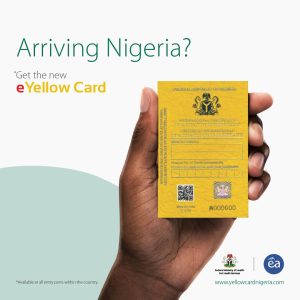
Sample of the original Nigeria e-Yellow Card held in hand showing security features like the QR code and holographic seal to distinguish it from fakes.

The official Nigeria e-Yellow Card features a unique QR code and ID number for instant digital verification.

Nigeria Yellow Fever Card: How to Determine if It’s Original (Part 1)

The Yellow fever card is a mandatory document issued to Nigerians travelling to countries where the virus is not common. Because Nigeria records regular outbreaks of the disease, you must provide evidence of vaccination to protect the citizens of the country you are visiting. Also, to protect yourself from the deadly condition.

This requirement reduces the chance of travellers carrying the virus across borders. It is not just a formality; it is an international travel law recognised by most countries. However, with counterfeits in circulation, how can you determine if your Yellow fever card is genuine?

What Immigration Officials Look For

When you arrive at a port of entry e.g the Ikeja Airport in Lagos State. Immigration officers inspect your documents for specific security features. To ensure your travel isn’t disrupted, you should check your yellow card for the same details.

1. Details on the Yellow Card Cover Page

The front page of the document displays the following essential information:

  • The Issuing Authority: If you obtained the certificate in Nigeria, this will read “Federal Republic of Nigeria.” However, any authorised country can issue this document to both locals and foreigners.

  • The Certificate Title: You will see “International Certificate of Vaccination or Prophylaxis.” Don’t be confused by the heavy terminology. While vaccination refers to receiving the vaccine, prophylaxis simply means prevention. Essentially, this title confirms you are protected against Yellow Fever Virus or other specified conditions.

  • Recipient Details: Your name is printed on the card following your inoculation. If your full name cannot fit, your surname and initials will be stated instead. This is standard practice, so there is nothing to worry about.

  • Passport Number: Your valid international passport number must be indicated here.

  • Card ID: This is a unique code assigned specifically to you, consisting of a combination of letters and numbers.

  • QR Code: This is crucial for security purposes. Immigration officers scan this code to instantly verify if the certificate is genuine. However, because the Nigerian government recently upgraded its database, other measures are occasionally used to validate the cards.

For more information. You should read part 2 here. To learn more about the yellow fever immunisation for travel consult Inocul8 today.
Hepatitis B: Cost to treat in Nigeria?

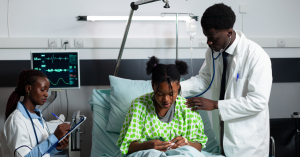
hepatitis b: A male doctor and female nurse attend to a patient in a Nigerian hospital bed.

Regular specialist consultations and hospital visits are a critical, yet expensive, part of long-term Hepatitis B management in Nigeria.

Hepatitis B: How Much Does it Cost to Manage in Nigeria?

Imagine an enemy that you can live with in the same house for years without knowing. This is the situation of people living with hepatitis B infection. A liver disease caused by the hepatitis B virus (HBV). The illness can be prevented by taking three doses of the hepatitis vaccine, also known as hepb vaccine. Most patients ask, “hepatitis b is it curable?” Presently, there is no cure, so infected individuals will need to manage their health for an extended period. About 20 million Nigerians are living with the virus. Nine out of 10 don’t know they have it. These patients will need to manage their health through regular check-ups, a balanced diet, and the use of medications. This article presents the financial implications of hepatitis B treatment in Nigeria, drawing on research findings done in the country.

Cost of hepatitis B management in Nigeria

The National Financial Burden

According to Dr. Godwin Ntadom, Director of the Public Health Department at the Federal Ministry of Health (FMOH), the country’s collective expenses on hepatitis range between 13.3 and 17.9 trillion Naira. But the question the average Nigerian asks is: What does it cost me to manage a long-term HBV infection?

The Patient’s Burden of Hepatitis B

To understand the financial weight of this disease, we have categorised the costs into direct medical, direct non-medical, and indirect costs based on recent research estimates.

  1. Direct Medical Costs (#1, 413, 090 or $933/year)

These are the expenses strictly related to clinical care. For a person living with HBV, this includes:

  • Hospital registration and doctor consultation fees.
  • Antiviral and liver-protective medications.
  • Crucial laboratory tests such as Hepatitis B DNA viral load, serology, liver function tests, and abdominal ultrasound scans.
  1. Direct Non-Medical Costs (# 202, 215 or $133/year)

Treatment doesn’t happen in a vacuum. These are the “hidden” out-of-pocket expenses, including transportation to clinics, meals during hospital visits, and the costs incurred by caregivers or family members accompanying the patient.

  1. Indirect Healthcare Costs (#640,095 or $421/year)

This represents the “opportunity cost” of the disease. It quantifies the economic loss when a patient is unable to work or spend time productively due to illness or fatigue.

With an estimated total of $ 2,246,978 or $1,487 per year, managing Hepatitis B is a significant financial burden. For many Nigerian families, this amount is high enough to drive them into poverty as they battle to save the life of a loved one.

Conclusion 

Managing this liver condition in Nigeria is undeniably a costly endeavour. It requires a significant out-of-pocket expenditure that most individuals cannot sustain over the long term.

The most financially sound strategy is prevention using solutions like hepatitis b vaccination or hep b vaccination. It saves both money and lives. To understand how to protect yourself and your family from this financial and physical burden, you can consult with the doctors at Inocul8 today.


HPV Vaccine: Does It Cause Infertility?

HPV Vaccine: What Effect Does It have on fertility?

Picture of a man thinking if his daughters should receive the HPV Vaccine.James was worried about taking his daughters for the human papillomavirus (HPV) vaccination after hearing the vaccine caused infertility. 

The human papillomavirus (HPV) vaccine received authorisation for public use in 2006 to prevent diseases and cancers caused by the human papillomavirus. 

Parents are concerned that vaccinating their children against the human papillomavirus (HPV) might affect their ability to give birth later. Does the HPV vaccine cause infertility?

The HPV vaccine and its effect on fertility

Infertility is the inability of a couple to conceive after a year of regular and unprotected sexual intercourse.

According to the World Health Organisation (WHO), primary infertility is a situation where a woman has never gotten pregnant. Secondary infertility is when a woman has given birth earlier but now experiences difficulty in getting pregnant.

In the US, research conducted among women aged 18 to 33 found no link between the HPV vaccine and infertility. The scientists concluded that there was no evidence of a rise in infertility cases in women who received the HPV vaccine.

Similarly, a study was done to assess the effect of HPV immunisation on how easily women get pregnant. The experiment involved 3,483 women and 1,022 men participants. The researchers found that among women who had past sexually transmitted infections (STIs), the vaccine made it easy for them to become pregnant. 

A nationwide study was done in Denmark among 996,300 girls and women aged 11 to 34 years from 2007 to 2016. The researchers concluded that HPV vaccination is safe and doesn’t affect the ovaries of women nor their ability to conceive. 

In conclusion, if you’re a parent worried about the possible effect of the HPV vaccination on the fertility of your child. Don’t be troubled; scientific findings have shown that the vaccine has no negative effect on the fertility of those who received it. 

To learn more about the HPV vaccination, you can consult Inocul8 today and have our doctors provide you with detailed information.

Preventing HBV in Lagos: Inocul8’s 2019 World Hepatitis Day Outreach

Preventing HBV in Lagos: Inocul8’s 2019 World Hepatitis Day Outreach

Inocul8’s mission is to help people and families prevent infectious diseases, as we believe no one should suffer or die from illnesses that existing solutions can prevent.

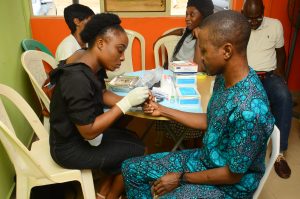
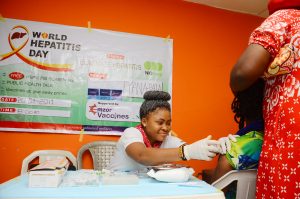
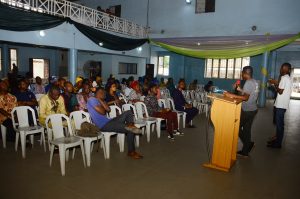
In 2019, to celebrate World Hepatitis Day (observed annually on July 28), we conducted a successful outreach program in Iyana Paja, Lagos State. The initiative focused on education, screening, and prevention.

Educating the Community

The outreach began with an educational session. Participants learned that hepatitis B is a liver disease caused by the Hepatitis B virus (HBV). They were strongly encouraged to participate in the screening exercise to determine their current status. We emphasised that individuals who tested negative should pursue vaccination.

Screening Participants for Hepatitis B

The Inocul8 team provided HBV screening to all participants, enabling them to know their infection status. The screening test works by detecting Hepatitis B surface proteins (HBsAg), which are present in anyone with the virus. The rapid test involves collecting a small blood sample and analysing it for these specific viral proteins.

Vaccination for Prevention

The final activity was offering vaccination to participants who tested negative for hepatitis B. The goal of the vaccination was to provide long-term protection against the infection in case of future exposure. Individuals require three doses of the vaccine to be fully immunised.

Meet the Founders

Meet the Founders

A long time ago, long before Inocul8 had a logo, a clinic, or even a name—a seed was planted.

Farmers say the best time to plant a tree was 20 years ago; the next best time is now. In many ways, that is how the Inocul8 story began: as a quiet seed of an idea that the future of health in Africa should be built on prevention, not on pain.

Inocul8 was officially founded in 2019 by Dr Osezua Momoh and Dr Emmanuel Egbroko, with a clear mission: to help families prevent communicable diseases. The spark for this mission, however, started years earlier. With a near-death experience Emmanuel had while serving as a Youth Corps member in Northern Nigeria.

Before Inocul8, they were just two young doctors in their twenties, full of questions and restless energy.

In 2016, Emmanuel and Momoh met at a Young African Leaders Initiative (YALI) Regional Leadership Center program at GIMPA in Accra, Ghana. Surrounded by other young leaders dreaming about the future of the continent, they began asking themselves a hard question:

“If we really want to change health in our country, where do we start?”

They both knew the truth: health insurance coverage was low, hospital wards were full, and people were still dying from diseases that had vaccines and simple preventive solutions. The more they spoke, the clearer it became—prevention wasn’t just important; it was the only logical starting point. Focusing on preventive healthcare, they decided, would be the best thing after sliced bread.

After YALI, life took them to different corners of Nigeria, but their shared mission followed them.

In December 2016, Momoh went to serve at Lagos State University Teaching Hospital (LASUTH), where he helped manage people living with HIV.

Emmanuel served at the General Hospital in Minna, Niger State, where he provided access to medications for patients living with HIV.

There, Emmanuel witnessed the reality of preventable disease up close:

  • He saw a high burden of hepatitis B among patients visiting the hospital.
  • He saw children on the streets who had lost their limbs to poliovirus infection.
  • He experienced communities struggling with poor access to clean water.

He carried these images with him and often called Momoh to share what he was seeing. Those conversations slowly turned into conviction: this was not how things had to be.

Then came the moment that changed everything.

In April 2017, Emmanuel fell critically ill and was hospitalised at the General Hospital in Minna with severe typhoid fever. Lying on the hospital bed, weak and unsure of what would happen next, he experienced firsthand what it meant to be on the other side of care—afraid, vulnerable, and dependent on a system already under pressure.

That hospital stay became his turning point.

It transformed their shared ideas from “someone should do something” into “we must build something.” That “something” eventually became Inocul8.

In Emmanuel’s words:

“We started Inocul8 to help people prevent infectious diseases because we didn’t want people to die from diseases that have affordable preventive solutions. I didn’t want people to experience what I went through in the hospital. I wanted access to prevention to be easy and convenient for everyone.”

From two young doctors with a shared conviction to a mission-driven brand, Inocul8 exists today because of one simple belief:

No one should suffer or die from a disease we already know how to prevent.

Purpose of the Inocul8 Brand

Purpose of the Inocul8 Brand

In Nigeria and across Africa, families like yours and mine often struggle to get simple preventive care. You may spend hours in a crowded clinic, only to see a health worker for a few minutes. Many people give up, delay vaccination, or fail to receive the protection they need.

Because prevention is hard to access, diseases like hepatitis B, the human papillomavirus (HPV), and other childhood diseases still quietly harm millions of people. Busy schedules, long distances to clinics, and confusing health information contribute to the burden. The system is not built around the real lives of families.

That’s why, since 2019, Inocul8 has been on a mission to make disease prevention easy, convenient, and timely for millions of Nigerians and Africans.

As a preventive healthcare brand, we bring you:
• Clear, simple information on how to protect yourself and your family
• Convenient access to disease prevention interventions such as vaccines and other preventive services, without the usual stress

Our purpose is simple:
To help families stay free from preventable diseases by making protection easy to understand and easy to get.

Stay in touch with us:

Instagram/Facebook: https://instagram.com/inocul8

TikTok: https://www.tiktok.com/@inocul8_global

Website: https://inocul8.com.ng/

WhatsApp: +2347063736485, +2349136095157 (bot)